Por el Equipo de Quédate.ca
Ejemplos para conocer los temas que podrían revisar, sin memorizar respuestas
Cuando se acerca la audiencia de refugio, muchas personas quieren saber exactamente qué les van a preguntar. Es una preocupación normal. Pero hay algo que debes saber desde el comienzo: no existe un cuestionario oficial único que se use en todas las audiencias.
Cada caso es diferente. Las preguntas dependen de tu historia, de tu BOC, de las pruebas que presentaste, de los temas que el miembro de la Refugee Protection Division, conocida como RPD, considere importantes y de si participa el representante del Ministro.
Las preguntas de este artículo son solamente ejemplos de temas que podrían revisarse. No son obligatorias, no están completas y no significan que aparecerán en tu audiencia.
Quién puede hacer preguntas
En una audiencia común, el miembro de la RPD dirige el proceso y normalmente empieza las preguntas. Después puede preguntar tu representante, si tienes uno. Si el Ministro interviene en tu caso, su representante también puede hacer preguntas.
Al comienzo, el miembro suele explicar los temas que necesita revisar. Eso te ayuda a entender en qué puntos se concentrará la audiencia. Aun así, pueden surgir preguntas adicionales mientras hablas o cuando se revisan los documentos.
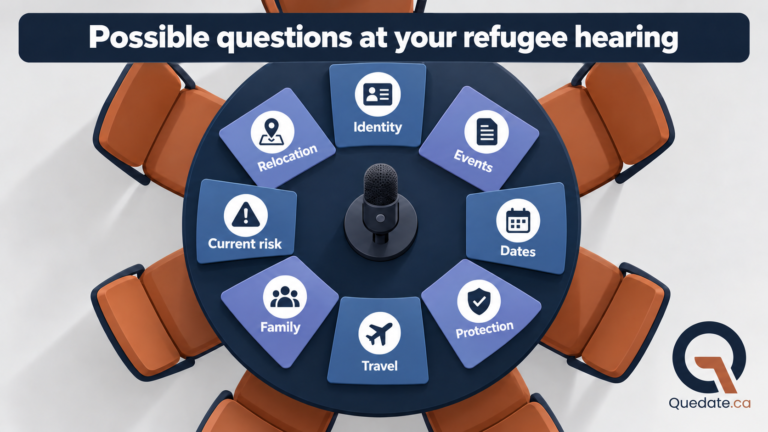
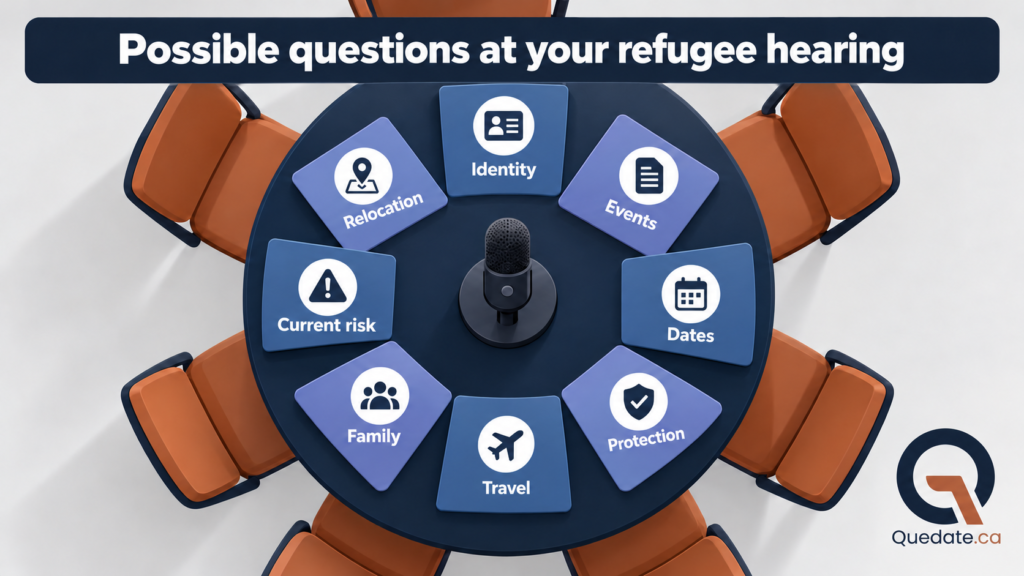
Preguntas sobre tu identidad y tus antecedentes
Pueden preguntarte tu nombre completo, lugar de nacimiento, nacionalidad, estudios, trabajo, familia o lugares donde viviste. Estas preguntas ayudan a confirmar quién eres y a entender tu vida antes de los hechos que te hicieron salir.
Ejemplos posibles:
- ¿Dónde naciste y dónde vivías antes de salir de tu país?
- ¿A qué te dedicabas?
- ¿Con quién vivías?
- ¿Qué documentos tienes para demostrar tu identidad?
Preguntas sobre lo que te ocurrió
El miembro puede pedirte que expliques los hechos principales de tu caso. Puede buscar detalles que ayuden a entender quién te hizo daño o te amenazó, qué ocurrió, por qué ocurrió y cómo te afectó.
Ejemplos posibles:
- ¿Qué ocurrió exactamente?
- ¿Quién te amenazó o te hizo daño?
- ¿Por qué crees que esa persona o grupo actuó contra ti?
- ¿Qué pasó después de ese hecho?
Preguntas sobre fechas y orden de los hechos
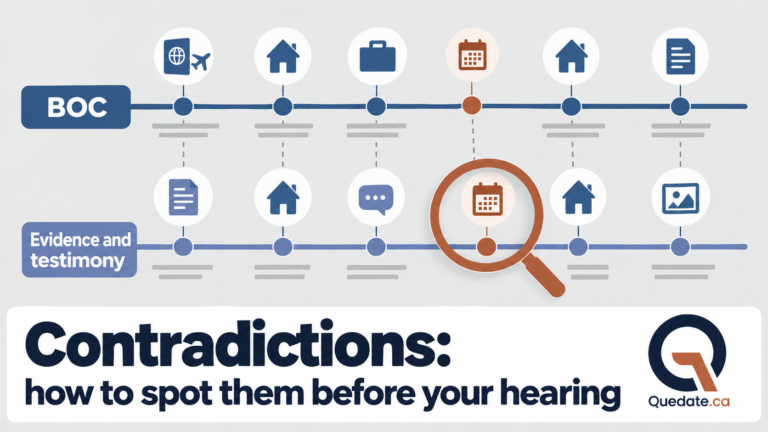
La RPD puede comparar lo que dices con tu BOC, tu narrativa, tus formularios, tus entrevistas anteriores y tus pruebas. Por eso pueden preguntarte cuándo ocurrió cada hecho y qué pasó antes o después.
Si no recuerdas una fecha exacta, no la inventes. Puedes explicar que la fecha es aproximada y decir qué sí recuerdas. Una respuesta honesta es mejor que una fecha creada para llenar un vacío.
Ejemplos posibles:
- ¿Cuándo ocurrió la primera amenaza?
- ¿Cuánto tiempo pasó entre ese hecho y tu salida?
- ¿Qué hiciste durante ese periodo?
- ¿Cuándo llegaste a Canadá y cuándo pediste refugio?
Preguntas sobre la protección en tu país
Pueden preguntarte si buscaste ayuda de la policía, de otra autoridad o de una organización. Si pediste ayuda, explica qué hiciste y qué respuesta recibiste. Si no lo hiciste, explica tus razones usando los hechos de tu propia situación.
Ejemplos posibles:
- ¿Fuiste a la policía o a otra autoridad?
- ¿Qué ocurrió cuando pediste ayuda?
- Si no pediste ayuda, ¿por qué no lo hiciste?
- ¿Por qué piensas que las autoridades no podrían protegerte ahora?
Preguntas sobre otra ciudad o región de tu país
En algunos casos, el miembro puede estudiar si podrías vivir con seguridad en otra parte de tu país. Este tema suele llamarse alternativa de refugio interno o IFA, por sus siglas en inglés.
Ejemplos posibles:
- ¿Intentaste mudarte a otra ciudad?
- ¿Qué ocurrió allí?
- ¿Por qué la persona o el grupo que temes podría encontrarte?
- ¿Por qué no sería razonable vivir en esa región?
Preguntas sobre tu salida, tu viaje y otros países
También pueden revisar cómo saliste, por cuáles países viajaste y si buscaste protección en otro lugar. El objetivo puede ser entender tu ruta, tus decisiones y cualquier demora en pedir refugio.
Ejemplos posibles:
- ¿Cómo saliste de tu país?
- ¿En qué países estuviste antes de llegar a Canadá?
- ¿Pediste protección en otro país?
- Si esperaste para pedir refugio, ¿por qué ocurrió esa demora?
Preguntas sobre el riesgo actual
La RPD debe entender qué podría pasarte si regresas. Por eso pueden preguntarte si el peligro continúa, si recibiste mensajes recientes o si ocurrieron hechos nuevos relacionados con tu caso.
Ejemplos posibles:
- ¿Quién podría hacerte daño si regresas?
- ¿Por qué el riesgo todavía existe?
- ¿Has recibido amenazas desde que llegaste a Canadá?
- ¿Qué sabes hoy de la situación que te obligó a salir?
Preguntas difíciles o sobre posibles contradicciones
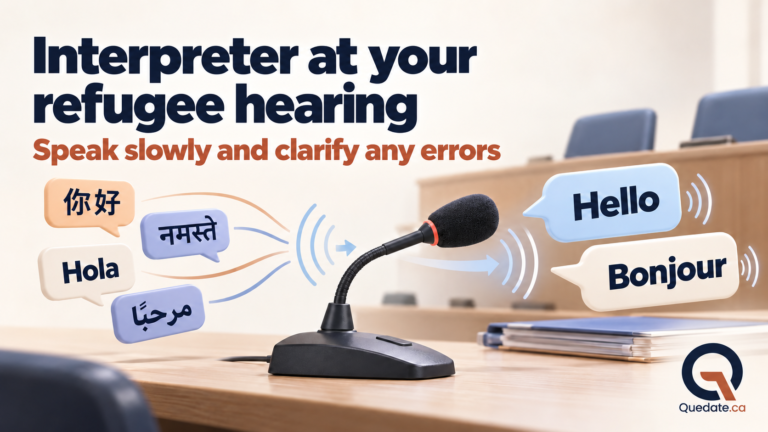
Una pregunta puede parecer dura porque busca aclarar una diferencia entre documentos o una información que antes no apareció. Escucha completa la pregunta. Si no la entiendes, pide que la repitan o que la expliquen de otra manera.
Ejemplos posibles:
- ¿Por qué esta fecha es diferente en tu BOC y en este documento?
- ¿Por qué no mencionaste antes este hecho?
- ¿Por qué tu explicación es distinta de la de un familiar?
- ¿Cómo explicas esta publicación o mensaje?
Cómo prepararte sin memorizar
- Lee tu BOC, tu narrativa y tus formularios completos.
- Ordena los hechos en una línea de tiempo.
- Revisa tus pruebas y qué parte de tu historia apoya cada una.
- Practica explicar los hechos con tus propias palabras.
- Si encuentras un error o una diferencia, revísala con la persona autorizada que te asesora antes de decidir qué hacer.
- No inventes detalles y no aprendas respuestas de memoria.
Prepararte significa entender tu historia y poder explicarla. No significa adivinar todas las preguntas ni construir respuestas perfectas.
Errores que debes evitar
- Creer que estos ejemplos son un cuestionario oficial.
- Memorizar respuestas palabra por palabra.
- Copiar la respuesta de otra persona.
- Inventar una fecha o un detalle para no decir no recuerdo.
- Responder antes de entender la pregunta.
- Practicar una versión que no coincide con tus documentos.
Conclusión
No puedes saber exactamente qué te preguntarán. Sí puedes llegar con tu historia organizada, tus documentos revisados y la disposición de responder con sinceridad.
Usa estas preguntas como una guía de práctica, no como una promesa de lo que ocurrirá. Cada audiencia es diferente y el miembro decide qué necesita preguntar para resolver el caso.
Frequently asked questions
¿Estas preguntas van a salir en mi audiencia?
No necesariamente. Son ejemplos educativos. La RPD no publica una lista única obligatoria y las preguntas dependen de cada expediente.
¿Debo memorizar mis respuestas?
No. Debes conocer tu historia y tus documentos, pero responder con tus propias palabras.
¿Qué hago si no entiendo una pregunta?
Pide que la repitan, que la digan más despacio o que la expliquen de otra manera antes de responder.
Consulta la información oficial
- IRB: Directriz 7 sobre preparación y desarrollo de la audiencia
- IRB: Paso 6, asistir a la audiencia
- IRB: Evaluación de credibilidad en solicitudes de refugio
Da el siguiente paso en tu preparación
Conoce el sistema integral de preparación de quedate.ca para trabajar tu BOC, narrativa, pruebas, preguntas difíciles, intérprete, comunicación y participación en la audiencia.
Conoce el sistema integral de preparación
Aviso importante: Este artículo fue preparado por el Equipo de Quédate.ca con fines exclusivamente educativos e informativos. No constituye asesoría legal, no crea una relación abogado-cliente o consultor-cliente y no sustituye el análisis individual de un representante legal autorizado. Las leyes, reglamentos, políticas y procedimientos de inmigración y refugio en Canadá pueden cambiar. Antes de actuar o tomar una decisión, verifica la legislación vigente y la información oficial aplicable a tu situación y, cuando corresponda, obtén asesoría profesional autorizada.
By the Quedate.ca Team
Examples of topics that may be explored, to help you prepare without memorizing answers
As a refugee hearing approaches, many people want to know exactly what they will be asked. This is a normal concern. But there is something you should know from the start: there is no single official questionnaire used at every hearing.
Every case is different. The questions depend on your story, your Basis of Claim (BOC) form, the evidence you submitted, the issues the member of the Refugee Protection Division, known as the RPD, considers important, and whether the Minister’s representative takes part.
The questions in this article are only examples of topics that may be explored. They are not mandatory or exhaustive, and they do not mean that you will be asked them at your hearing.
Who can ask questions
At a typical hearing, the RPD member leads the proceedings and usually begins the questioning. Your representative, if you have one, may then ask questions. If the Minister intervenes in your case, the Minister’s representative may also ask questions.
At the beginning, the member usually explains the issues they need to examine. This helps you understand what the hearing will focus on. Even so, further questions may come up as you speak or as documents are reviewed.
Questions about your identity and background
You may be asked about your full name, place of birth, nationality, education, work, family, or the places where you lived. These questions help confirm who you are and explain your life before the events that caused you to leave.
Possible examples:
- Where were you born, and where did you live before leaving your country?
- What did you do for a living?
- Who did you live with?
- What documents do you have to establish your identity?
Questions about what happened to you
The member may ask you to explain the main events in your case. They may seek details to help understand who harmed or threatened you, what happened, why it happened, and how it affected you.
Possible examples:
- What exactly happened?
- Who threatened or harmed you?
- Why do you believe that person or group targeted you?
- What happened after that event?
Questions about dates and the order of events
The RPD may compare what you say with your BOC, your narrative, your forms, your earlier interviews, and your evidence. That is why you may be asked when each event happened and what came before or after it.
If you do not remember an exact date, do not make one up. You can explain that the date is approximate and say what you do remember. An honest answer is better than a date invented to fill a gap.
Possible examples:
- When did the first threat occur?
- How much time passed between that event and your departure?
- What did you do during that period?
- When did you arrive in Canada, and when did you make your refugee claim?
Questions about protection in your country
You may be asked whether you sought help from the police, another authority, or an organization. If you asked for help, explain what you did and what response you received. If you did not, explain your reasons using the facts of your own situation.
Possible examples:
- Did you go to the police or another authority?
- What happened when you asked for help?
- If you did not ask for help, why not?
- Why do you believe the authorities would not be able to protect you now?
Questions about another city or region in your country
In some cases, the member may consider whether you could live safely in another part of your country. This is often referred to as an internal flight alternative, or IFA.
Possible examples:
- Did you try moving to another city?
- What happened there?
- Why could the person or group you fear find you?
- Why would it not be reasonable to live in that region?
Questions about your departure, your journey, and other countries
The RPD may also examine how you left, which countries you travelled through, and whether you sought protection elsewhere. This may help them understand your route, your decisions, and any delay in making a refugee claim.
Possible examples:
- How did you leave your country?
- Which countries were you in before arriving in Canada?
- Did you seek protection in another country?
- If you waited before making a refugee claim, why was there a delay?
Questions about the current risk
The RPD needs to understand what could happen to you if you return. You may therefore be asked whether the danger continues, whether you have received recent messages, or whether there have been new events related to your case.
Possible examples:
- Who could harm you if you return?
- Why does the risk still exist?
- Have you received threats since arriving in Canada?
- What do you know today about the situation that forced you to leave?
Difficult questions or questions about possible contradictions
A question may seem harsh because it seeks to clarify a difference between documents or information that was not mentioned earlier. Listen to the whole question. If you do not understand it, ask for it to be repeated or explained another way.
Possible examples:
- Why is this date different in your BOC and in this document?
- Why did you not mention this event earlier?
- Why is your explanation different from your family member’s?
- How do you explain this post or message?
How to prepare without memorizing
- Read your BOC, your narrative, and your forms in full.
- Put the events in order on a timeline.
- Review your evidence and which part of your story each item supports.
- Practise explaining the events in your own words.
- If you find an error or a difference, review it with the authorized professional advising you before deciding what to do.
- Do not invent details or learn answers by heart.
Preparing means understanding your story and being able to explain it. It does not mean guessing every question or building perfect answers.
Mistakes to avoid
- Believing these examples are an official questionnaire.
- Memorizing answers word for word.
- Copying someone else’s answer.
- Inventing a date or detail to avoid saying you do not remember.
- Answering before you understand the question.
- Practising a version that does not match your documents.
Conclusion
You cannot know exactly what you will be asked. You can arrive with your story organized, your documents reviewed, and a willingness to answer truthfully.
Use these questions as a practice guide, not as a promise of what will happen. Every hearing is different, and the member decides what they need to ask to determine the case.
Frequently asked questions
Will these questions come up at my hearing?
Not necessarily. They are educational examples. The RPD does not publish a single mandatory list, and the questions depend on each case.
Should I memorize my answers?
No. You should know your story and your documents, but answer in your own words.
What should I do if I do not understand a question?
Ask for it to be repeated, spoken more slowly, or explained another way before you answer.
Consult the official information
- IRB: Guideline 7 on preparing for and conducting a hearing
- IRB: Step 6, go to your hearing
- IRB: Assessment of credibility in refugee claims
Take the next step in your preparation
Explore Quedate.ca’s complete preparation system to work on your BOC, narrative, evidence, difficult questions, working with an interpreter, communication and participation in the hearing.
Explore the complete preparation system
Important notice: This article was prepared by the Quedate.ca Team for educational and informational purposes only. It does not constitute legal advice, create a lawyer-client or consultant-client relationship, or replace an individual assessment by an authorized legal representative. Canada’s immigration and refugee laws, regulations, policies and procedures may change. Before taking action or making a decision, check the current legislation and official information that apply to your situation and, where appropriate, obtain authorized professional advice.