Por el Equipo de Quédate.ca
Pasos sencillos para revisar la notificación y organizar tu preparación
Recibir la Notice to Appear, o Notificación para Comparecer, cambia la espera por una fecha concreta. Ese documento indica cuándo y cómo se realizará tu audiencia ante la Refugee Protection Division, conocida como RPD.
No basta con guardar la carta. Debes leerla completa, revisar que los datos sean correctos y empezar a organizar tu preparación. Si tienes representante, envíale una copia y confirma que ambos están trabajando con la misma notificación.
Primero revisa la fecha, la hora y el formato
Busca en la notificación la fecha, la hora y si la audiencia será virtual o presencial. Revisa también la zona horaria si aparece. Anota la información en más de un lugar y configura recordatorios.
Si la audiencia es virtual, la notificación o las comunicaciones de la RPD incluirán instrucciones para conectarte. Si es presencial, confirma la dirección y calcula con tiempo cómo llegar.
Valida que se haya solicitado intérprete y el idioma correcto
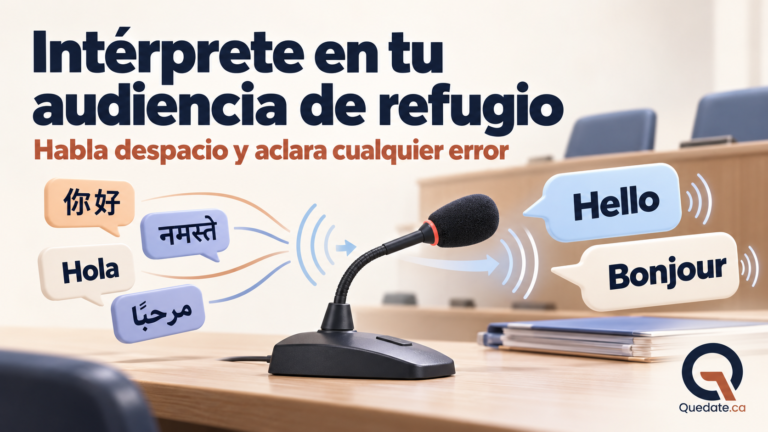
En el BOC puedes indicar el idioma que deseas usar en la audiencia y si necesitas intérprete. La IRB proporciona sin costo el intérprete de la audiencia; no tienes que conseguir ni contratar a esa persona.
Lo que debes hacer es revisar tu BOC y la información recibida para validar que el intérprete fue solicitado y que el idioma y el dialecto son correctos. Si no se pidió, si ahora lo necesitas o si el idioma o dialecto no es el correcto, contacta a la RPD lo antes posible y sigue las instrucciones escritas de tu expediente.
El formulario BOC indica que un cambio de idioma de la audiencia o de idioma o dialecto de interpretación debe informarse por escrito al menos 10 días calendario antes. No esperes a los últimos días para avisar.
Lee de nuevo tu BOC y tu narrativa
Tu BOC es una de las bases de la audiencia. Léelo completo, no solamente las páginas donde contaste los hechos principales. Revisa nombres, fechas, lugares, viajes, familiares y las respuestas sobre protección estatal y reubicación interna.
Si encuentras un error, una omisión o una posible contradicción, no cambies documentos por tu cuenta sin entender el proceso. Revisa el punto con la persona autorizada que te asesora. La RPD tiene reglas para enviar cambios o adiciones al BOC y, en general, debe recibirlos al menos 10 días calendario antes de la audiencia.
Revisa tus pruebas y los plazos
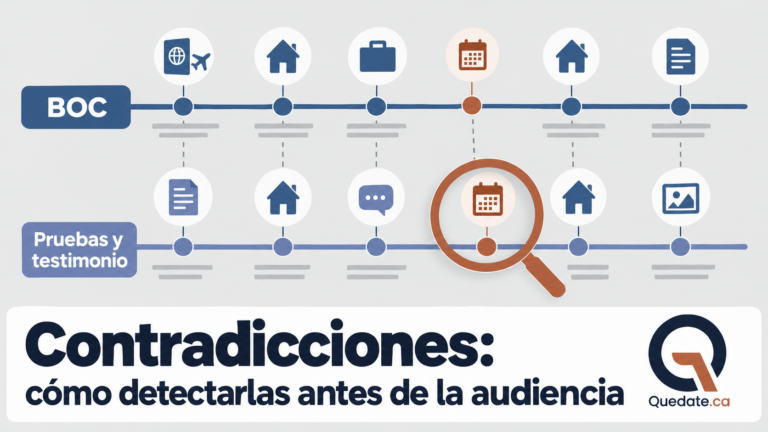
Compara tus pruebas con el BOC y con tu línea de tiempo. Pregúntate qué hecho apoya cada documento y si existe alguna fecha o dato diferente que debas entender.
La regla general publicada por la RPD es que la evidencia debe recibirse como máximo 10 días calendario antes de la audiencia. La evidencia tardía solo se acepta en circunstancias especiales y requiere una solicitud. No uses este artículo para calcular tu plazo: revisa tu notificación y las instrucciones actuales de la RPD.
Organiza una carpeta para el día de la audiencia
Ten juntos tu BOC, la Notice to Appear, las pruebas enviadas y cualquier documento que la RPD te haya entregado. Usa el mismo orden y la misma numeración de páginas del paquete que tienen el miembro y tu representante.
En una audiencia virtual, debes tener acceso a una copia completa de los documentos. No empieces a leer el BOC o tus notas durante la audiencia sin que el miembro te lo permita.
Habla con tu representante
Si tienes abogado, consultor de inmigración o, en Ontario, paralegal autorizado, acuerden una reunión de preparación. Revisa qué temas pueden ser importantes, qué documentos faltan y cómo se desarrollará la audiencia.
Si no tienes representante, revisa los recursos oficiales de la RPD y busca orientación profesional autorizada cuanto antes si la necesitas. No aceptes que una persona no autorizada te prometa un resultado.
Si la audiencia es virtual prueba todo antes
Usa un computador como equipo principal, instala Microsoft Teams y prueba cámara, micrófono, parlantes y conexión. Elige una habitación privada y tranquila. Evita los espacios públicos y no uses redes públicas, como las de las cafeterías.
La guía de la RPD pide conectarse 15 minutos antes. Un empleado de la RPD realiza el ingreso y verifica que puedas participar. Ten a mano el teléfono indicado durante el registro o el que aparece en la Notice to Appear para usarlo si se cae la conexión.
Prepara tu cuerpo y tu mente
Dormir, comer y llegar con tiempo también forman parte de la preparación. No necesitas parecer perfecto. Necesitas estar en condiciones de escuchar, entender y responder.
Si tienes una condición médica, psicológica o una necesidad particular que pueda afectar tu participación, habla con tu representante y solicita cualquier adaptación con suficiente anticipación.
Lista rápida para revisar
- Leí completa la Notice to Appear.
- Anoté fecha, hora, formato y lugar o enlace.
- Validé que se solicitó intérprete y que el idioma y dialecto son correctos.
- Revisé el BOC, la narrativa y los formularios.
- Comparé las pruebas con mi historia y revisé los plazos.
- Tengo una copia ordenada del expediente.
- Probé el equipo y el lugar si la audiencia es virtual.
- Sé cómo comunicarme con mi representante y con la RPD.
Conclusión
La fecha de audiencia no es solamente un dato en el calendario. Es una señal para revisar todo el expediente con método.
Empieza por la notificación. Valida el intérprete solicitado. Revisa el BOC, las pruebas y los plazos. Si tienes representante, trabaja estos puntos con esa persona. Llegar preparado reduce errores que sí pueden evitarse.
Preguntas frecuentes
¿Tengo que conseguir mi propio intérprete?
No. Si necesitas intérprete para la audiencia y fue solicitado, la IRB proporciona uno sin costo. Revisa que el idioma y el dialecto pedidos sean correctos.
¿Qué hago si no se solicitó intérprete?
Contacta a la RPD lo antes posible y sigue las instrucciones escritas. No esperes al día de la audiencia.
¿La fecha de la audiencia cambia el plazo de mis pruebas?
La RPD aplica reglas de entrega y tu notificación contiene información importante. Revisa el plazo de tu expediente y habla con tu representante si tienes dudas.
Consulta la información oficial
- IRB: Paso 3, prepararse para la audiencia
- IRB: Quiénes estarán en la audiencia e intérprete
- IRB: Paso 6, asistir a la audiencia
- IRB: Formulario Basis of Claim
- IRB: Preguntas y respuestas sobre cambios al BOC
- IRB: Paso 5, enviar evidencia
Da el siguiente paso en tu preparación
Conoce el sistema integral de preparación de quedate.ca para trabajar tu BOC, narrativa, pruebas, preguntas difíciles, intérprete, comunicación y participación en la audiencia.
Conoce el sistema integral de preparación
Aviso importante: Este artículo fue preparado por el Equipo de Quédate.ca con fines exclusivamente educativos e informativos. No constituye asesoría legal, no crea una relación abogado-cliente o consultor-cliente y no sustituye el análisis individual de un representante legal autorizado. Las leyes, reglamentos, políticas y procedimientos de inmigración y refugio en Canadá pueden cambiar. Antes de actuar o tomar una decisión, verifica la legislación vigente y la información oficial aplicable a tu situación y, cuando corresponda, obtén asesoría profesional autorizada.
By the Quedate.ca Team
Simple steps to review your notice and organize your preparation
Receiving the Notice to Appear gives you a specific date after a period of waiting. This document tells you when and how your hearing before the Refugee Protection Division, known as the RPD, will take place.
It is not enough to put the letter away. Read it in full, check that the details are correct, and start organizing your preparation. If you have a representative, send them a copy and confirm that you are both working from the same notice.
First, check the date, time, and format
Find the date and time in the notice, and check whether the hearing will be virtual or in person. Check the time zone as well, if one is shown. Write the information down in more than one place and set reminders.
If the hearing is virtual, the notice or communications from the RPD will include instructions for joining. If it is in person, confirm the address and plan how to get there well in advance.
Check that an interpreter was requested in the correct language
In the Basis of Claim (BOC) form, you can indicate the language you wish to use at the hearing and whether you need an interpreter. The IRB provides the hearing interpreter free of charge; you do not have to find or hire that person.
You should review your BOC and the information you have received to check that an interpreter was requested and that the language and dialect are correct. If an interpreter was not requested, if you now need one, or if the language or dialect is incorrect, contact the RPD as soon as possible and follow the written instructions for your case.
The BOC form states that a change to the language of the hearing or the language or dialect of interpretation must be reported in writing at least 10 calendar days beforehand. Do not wait until the last few days to give notice.
Read your BOC and narrative again
Your BOC is one of the foundations of the hearing. Read it in full, not just the pages where you described the main events. Check names, dates, places, trips, family members, and your answers about state protection and internal relocation.
If you find an error, an omission, or a possible contradiction, do not change documents on your own without understanding the process. Review the issue with the authorized professional advising you. The RPD has rules for submitting changes or additions to the BOC and, in general, must receive them at least 10 calendar days before the hearing.
Review your evidence and deadlines
Compare your evidence with your BOC and your timeline. Ask yourself which fact each document supports and whether there is a different date or detail that you need to understand.
The general rule published by the RPD is that evidence must be received no later than 10 calendar days before the hearing. Late evidence is accepted only in special circumstances and requires an application. Do not use this article to calculate your deadline: check your notice and the RPD’s current instructions.
Organize a folder for the day of the hearing
Keep your BOC, Notice to Appear, submitted evidence, and any documents the RPD has given you together. Use the same order and page numbering as the package held by the member and your representative.
At a virtual hearing, you must have access to a complete copy of the documents. Do not start reading your BOC or notes during the hearing unless the member allows you to do so.
Speak with your representative
If you have a lawyer, immigration consultant, or, in Ontario, an authorized paralegal, arrange a preparation meeting. Discuss which issues may be important, which documents are missing, and how the hearing will proceed.
If you do not have a representative, review the RPD’s official resources and seek advice from an authorized professional as soon as possible if you need it. Do not accept promises of an outcome from an unauthorized person.
If the hearing is virtual, test everything beforehand
Use a computer as your main device, install Microsoft Teams, and test your camera, microphone, speakers, and connection. Choose a private, quiet room. Avoid public spaces and do not use public networks, such as those in coffee shops.
The RPD’s guide asks you to connect 15 minutes early. An RPD employee handles check-in and verifies that you can participate. Have the telephone number provided during check-in or listed on the Notice to Appear ready in case your connection drops.
Prepare your body and mind
Sleeping, eating, and arriving early are also part of preparation. You do not need to seem perfect. You need to be able to listen, understand, and respond.
If you have a medical or psychological condition, or a particular need that may affect your participation, speak with your representative and request any accommodation well in advance.
Quick checklist
- I read the Notice to Appear in full.
- I noted the date, time, format, and location or link.
- I checked that an interpreter was requested and that the language and dialect are correct.
- I reviewed my BOC, narrative, and forms.
- I compared the evidence with my story and checked the deadlines.
- I have an organized copy of my case documents.
- I tested the equipment and location if the hearing is virtual.
- I know how to contact my representative and the RPD.
Conclusion
A hearing date is more than an entry in your calendar. It is a signal to review your whole case file methodically.
Start with the notice. Check the interpreter request. Review your BOC, evidence, and deadlines. If you have a representative, work through these points with them. Being prepared reduces mistakes that can be avoided.
Frequently asked questions
Do I have to find my own interpreter?
No. If you need an interpreter for the hearing and one was requested, the IRB provides one free of charge. Check that the requested language and dialect are correct.
What should I do if an interpreter was not requested?
Contact the RPD as soon as possible and follow the written instructions. Do not wait until the day of the hearing.
Does the hearing date change my evidence deadline?
The RPD applies rules for submitting documents, and your notice contains important information. Check the deadline for your case and speak with your representative if you have questions.
Consult the official information
- IRB: Step 3, get ready for your hearing
- IRB: Who will be at the hearing and the interpreter
- IRB: Step 6, go to your hearing
- IRB: Basis of Claim form
- IRB: Questions and answers about changes to the BOC
- IRB: Step 5, send evidence
Take the next step in your preparation
Explore Quedate.ca’s complete preparation system to work on your BOC, narrative, evidence, difficult questions, working with an interpreter, communication and participation in the hearing.
Explore the complete preparation system
Important notice: This article was prepared by the Quedate.ca Team for educational and informational purposes only. It does not constitute legal advice, create a lawyer-client or consultant-client relationship, or replace an individual assessment by an authorized legal representative. Canada’s immigration and refugee laws, regulations, policies and procedures may change. Before taking action or making a decision, check the current legislation and official information that apply to your situation and, where appropriate, obtain authorized professional advice.