By the Quédate.ca team
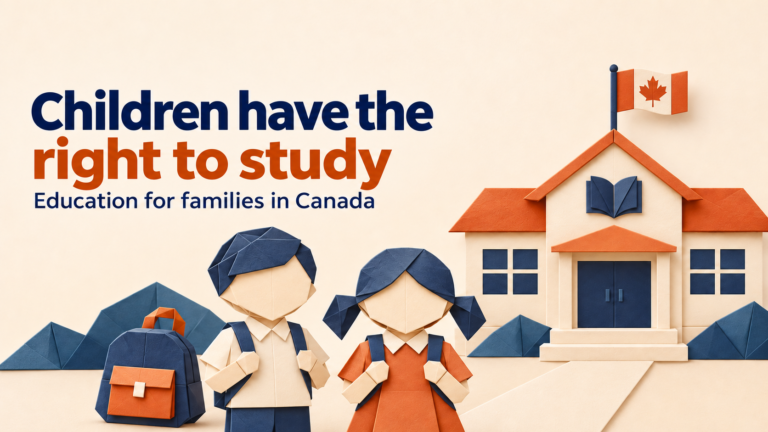
Arriving in a new country brings many questions. For parents, one of the most important is: “Can my children go to school while we sort out our immigration situation?”
Many families can enrol their children in school while awaiting a refugee decision or even when they do not have regular immigration status.
Children's education matters in Canada. Families should not assume that their children must stay home because their immigration documents have expired or they are still waiting for an answer.
Below we explain how it works and what you can do to get started.
Education is a children's right
Children have a right to education. This right is recognized in the Convention on the Rights of the Child, an international agreement to which Canada is a party.
The Convention says countries must work to provide access to education and free primary schooling. In Canada, this commitment is reflected in federal, provincial and territorial laws and measures.
A family's immigration situation and a child's access to school are not exactly the same thing. Even while parents are resolving their documents, they should ask how to enrol their children.
Each province and territory manages its schools and has its own rules. Check the conditions where your family lives.
Can my children attend school while we are claiming refugee protection?
Yes. The minor children of refugee claimants can attend school while the family awaits a decision. They do not have to wait for the hearing or a positive decision.
For example, if you arrived in Canada with your ten-year-old daughter and claimed refugee protection, you can start looking for a school for her. She can study while your family continues the process.
According to the Government of Canada, children who are refugee claimants, or whose parents are refugee claimants, normally do not need a study permit to attend preschool, primary or secondary school.
What if we do not have immigration status?
Some families remain in Canada after their documents expire. Others are trying to resolve their situation and are still waiting for an answer.
You may feel afraid or think your children cannot study. But lacking regular immigration status does not automatically mean a child must stay out of school.
Many families in this situation have children in school. The precise rules depend on the province, the child's age and other enrolment conditions. Here are two examples.
Ontario
Ontario law protects access to school for children under 18. If a child meets the other conditions for admission, admission cannot be denied solely because the child or their parents do not have regular immigration status.
Consider a family that arrived in Ontario as visitors. Their documents later expired, but they continued living in the province. If they have an eight-year-old child and meet the other enrolment conditions, the expired documents alone are not a reason to deny the child admission.
Ontario's instructions to school boards also say that a child should not be refused solely because the family cannot provide proof of immigration status, a work permit or a Social Insurance Number (SIN).
Quebec
Quebec also recognizes free access to public education services for many children, including situations where family immigration documents have expired or are unavailable.
For example, Quebec rules provide for free access when a child's parent or legal guardian habitually lives in Quebec, even if the family's immigration situation is precarious or irregular. The relevant age and residence conditions must be met.
If you live in Quebec and have questions, contact your local school service centre or school board and ask how to enrol your child.
Does enrolling my child resolve our immigration status?
Being able to attend school and having immigration status are different things.
A child's admission to school does not automatically give the child or the parents immigration status in Canada. It does not replace any immigration processes the family needs to complete.
If you have questions about your situation or the information requested at enrolment, seek guidance from a legal clinic or an authorized professional before making decisions.
How can I find a school?
Start by contacting the school board or school authority where you live. It is responsible for public schools in your community.
You can say: “I live in this city and want to enrol my child in school. Can you explain what I need to do?”
You will be asked, among other things, your child's age and where the family lives. The school authority can then explain the school and enrolment process.
If you live in Quebec, you can start with the government's page on enrolling a child in public school. The page is in French. If you need help understanding it, ask an organization that supports newcomers.
If you do not know your local school board, call 211 or visit 211.ca and ask which nearby organization can help you find a school. If you need to speak Spanish, ask for an interpreter; availability can vary by location.
What documents might I be asked for?
The school or school board may ask for information about your child's age, where they live and which grade they might attend.
Bring the documents you have available. These might include a passport or birth certificate, proof of where the family lives and, if you still have them, report cards or certificates from the previous school.
If you already have documents from your refugee claim, you can also ask which ones are useful for enrolment.
If a document is missing, keep asking. Explain your situation and ask what other options are available. Newcomer families cannot always bring every document, and each case needs to be considered.
What if my child does not speak English or French?
Many children arrive in Canada without speaking the language of their new school. That does not mean they cannot start studying.
When enrolling your child, explain which language they speak and ask what support the school offers. Some schools have classes or programs to help newcomer students learn English or French.
The change can feel big at first, but with time and support children can learn and adjust to their new surroundings.
Do I have to pay for school?
Public education is free for many children in Canada. Ontario says most children can attend public school for free regardless of their own or their parents' immigration status.
As explained above, Quebec also has free-education rules that may protect children whose families habitually live in the province, even when they have difficulties with immigration documents.
Access and fees depend on the rules applicable to each family. If you are told to pay tuition, ask why, request a written explanation and seek guidance before deciding. There may also be costs for materials or activities.
What if I am told my child cannot attend school?
Ask for an explanation. Find out whether a document is missing, which rule is being applied and whether there is another way to continue the enrolment.
If you are in Ontario and are told your child cannot attend solely because you or your child lack immigration status, ask about section 49.1 of the Education Act and request to speak with the school board.
You can also seek help from a community organization, a legal clinic or a lawyer. If possible, request the decision in writing so someone can help you review it.
Your children do not have to wait to begin their future
Resolving an immigration situation can take time, and it is natural to worry about your children's well-being and future.
Remember that waiting for a refugee decision or having difficulty with immigration documents does not automatically mean your children must stay out of school.
School can help them learn, make friends and adjust to their new community. Take the first step: contact your local school authority and seek support if you need it.
Official sources
- Ontario Education Act, section 49.1
- Ontario: school access for children without immigration status
- Quebec: public school enrolment
This article is for educational and informational purposes only. It is not legal advice. Enrolment laws and rules may change and differ by province or territory. Before making a decision, consult official information and speak with a lawyer or authorized professional about your situation.
If you are also preparing for your refugee hearing, explore our educational course.
Explore the refugee hearing course